Studio Sessions
Walden-Inspired Accounting
March 11, 2013Studio Sessions offers behind-the-scenes access to artists, writers, curators, and creative individuals through a variety of tête-à-tête conversations that consider the how, and what, and where of making art. Studio Sessions are presented as interviews, profiles, and studio visits through text, photo essays, and videos.
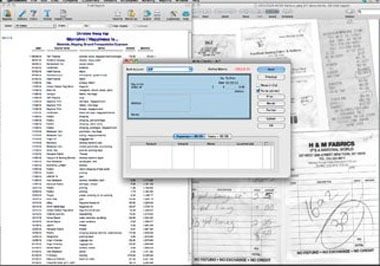
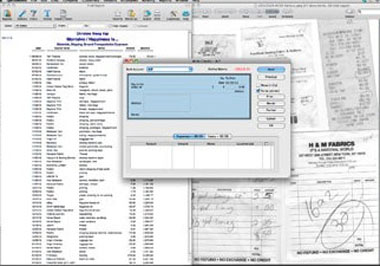
 Christine Wong Yap. Screenshot of Quikbooks ledger, 2013. Courtesy of the Artist.
Inspired by Thoreau’s Walden, Ann Hamilton’s “Creative Accounting” in The Believer, Eleanor Hanson Wise’s Show Me the Money series on Open Space, and the ongoing belief that demystifying the art world is helpful for artists and audiences, I am embarking on an experiment of transparency. Below, I list the material and labor expenses I incurred to produce a recent drawing.
Monetary accounting ignores the aesthetic, personal, psychological, and social rewards of artistic practice; nonetheless, I took this approach to see what is revealed about the art-making process. For example, the ink on paper in a frame that viewers see is a fraction of the materials used in the production of this work. Similarly, the act of drawing is a small part of the labor involved.
In this particular case, material costs were offset in part or in whole by estimated, lump-sum reimbursements from a presenting partner. I was very fortunate to have this support. Typically, artists default to covering all production costs. The more successful an artist, the more partners and negotiating power she has. This leads toward partners covering a greater share of or the larger overall production costs, which converts more revenue into artist’s income.
Additionally, I only provide figures for my outlay. In-kind donations and labor are mentioned by way of explanation, but I did not include their valuations because I neither know the actual values nor presume that my partners share my interest in transparency around this issue.
________
Total for Material Expenses: $757.19
Drawing materials subtotal: $40.80
- Gel pens: $20.28
- Vellum: $20.52
Procurement, research and preparation materials subtotal: $126.34
- "Illustration board: $6.83
- Ground transport of materials to residency: $8.95
- Flourish, by Martin Seligman (used copy): $16.77
- Luggage fee for transporting nine notebooks: $25
- Yoga mat, brought in same luggage as sketchbooks: $01
- Post-it notes: $2
- Newsprint for organizing research notes: $15.25
- Digital output: $29.34
- Gas for 111 miles, inclusive of two trips to framer and three trips to digital output service bureau: estimated at $22.20
- Highlighters and miscellaneous tools borrowed from parents: $0
- DSLR camera and tripod borrowed from residency: $0
- Used and new reference books from my existing collection, including Rainy Brain, Sunny Brain, by Elaine Fox; The Happiness Hypothesis, by Jonathan Haidt; Born to Be Good, by Dacher Keltner; Sex, Drugs and Chocolate, by Paul Martin; Happier, by Tal Ben-Shahar: $0
Framing subtotal: $487.50
I use ready-made frames when possible, but this work’s fragility, size, and probable shipping required professional framing.
Crating subtotal: $102.55
We built a crate in advance since I live in New York and do not plan to return for de-installation.
- Lumber, plywood, screws, and adhesive: $50.87
- Insulation foam: $10.462
- Shock-absorbing foam: $41.22
- Poly bag from framer: $0
- Use of miter saw, jigsaw, T-square, and workshop, in-kind from presenting partner: $0
- Use of other tools, in-kind from father: $0
- Use of truck with gas, in-kind from presenting partner/assistant: $0
Total for Labor: $971–2,875
112 hours of my labor subtotal: $896–$2,800
The low figure reflects California’s minimum wage of $8 per hour. The high number reflects a freelance rate of $25 per hour that experienced art handlers and artist’s assistants can command in New York.3
- Procurement related to organization and shipping: 0.5 days
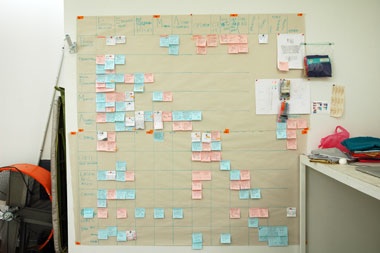
- Organizing research notes: 1.5 days
- Design development and color selection: 1.5 days
- Incorporate copyedits, revise design, and prepare for output: 1 day
- Pick up and re-order botched output, pick up new output: 0.5 day
- Draw initial drawing: 3 days
- Draw improved drawing: 3 days
- Photography and color-correction: 0.5 days
- Pack and deliver work to framer with subsequent pick up: 0.75 days
- Procure materials, borrow and return tools, and build crate: 1 day
- Procure and cut foam: 0.5 days
- Unpack and store crate and install art: 0.25 days
Subtotal: 14 days4
2.5 hours for copyeditor subtotal: $75
With dozens of texts and citations rendered in pen, I could not risk typos.
Assistants: 8 hours, $0
In-kind assistance was provided by presenting partner. I asked a truck-owning assistant to help out, as the crate materials and finished crate were too big to fit in my borrowed car.
I did not to include the following indirect costs incurred by partners and supporters.
I arrived at this figure with the advice of professionals, mainly considering the price of the other works in the show, past sales, and the cost of the frame. In the event of a sale, the presenting partner’s fee is 30 percent, or $630. The remaining artist’s portion would be $1,470. Assuming that all expenses were reimbursed, at 112 hours I would theoretically have made $13.12/hour pre–income tax.
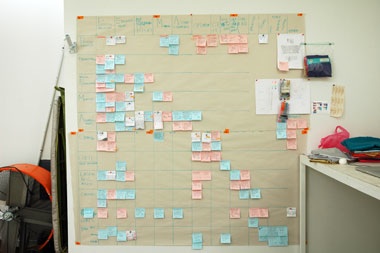
 Christine Wong Yap. Studio view of research notes at Lucas Artists Program at Montalvo Arts Center, Saratoga, CA. Courtesy of the Artist.