The Third Year
By Patricia MaloneyOvertly, there is the structure each issue configures. Behind that structure is a more amorphous exchange of ideas and observations
More »
August 16, 2012. We're wrapping up another year of issue production, and in honor of the occasion, we've asked some of our writers to reflect on the events of the past twelve months. Art Practical was created to foster and document investments of time with artists: in the studio, at the bar, in the gallery, at the opening. Overtly, there is the structure each issue configures, the categorization of information into features, reviews, events, and news. Behind that structure is a more amorphous exchange of ideas and observations that happens continually and casually but that catalyzes production and action. There are multiple ways in which the editors and writers make the effort to bring this interchange to light; as this issue shows, what is most notable about our encounters with art and artists is the extent to which we aspire to share them. Enjoy—PM
Overtly, there is the structure each issue configures. Behind that structure is a more amorphous exchange of ideas and observations
More »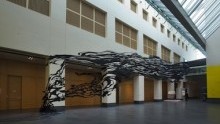
Challenging the traditional definition of art through the presentation of souvenirs, trinkets, and ephemera, the exhibition also questioned the deification of renowned artists and showed the potential for individual expression within an institution.
More »
There are artists whose appeal extends beyond the ranks of enthusiasts of their particular art forms; performers whose virtuosity confutes personal taste, and can hold in thrall connoisseurs, novices, and skeptics alike.
More »
I am obsessed with the dark and macabre, and I love the type of horror that hides just beneath the seemingly banal. I have seen few artists capable of rendering this in ways that are as beautiful as they are frightening
More »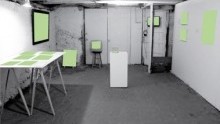
Stepping into the breach this past year has been an even more interesting space in the same storefront on 24th Street, with the name of Will Brown, run by Dave Kazprzak, Lindsey White, and Jordan Stein.
More »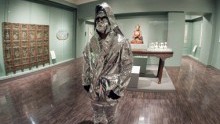
Successfully balancing the need to bring attention to its permanent collection while innovating in the special-exhibition domain, the Asian Art Museum's Phantoms of Asia exhibit renews the relevance of the institution's historical holdings.
More »
Moderated by Constance Lewallen, this talk at the San Francisco Art Institute (SFAI) was one of those rare nights when I left an auditorium invigorated and inspired. I’m not sure what I expected to hear from someone who has spent the past forty years involved in secretive art practices
More »
Starting from a point of geographic inquiry, artists can make histories fresh, create new levels of engagement, and help viewers situate their individual experience of a place, both for those who have a fixed notion of the site and those who may discover it for the first time.
More »August 2, 2012. In her preview of the performances for Stage Presence, Shannon Jackson poses questions about the spatial and temporal conditions, viewing relations, and institutional parameters an audience might encounter in a live performance series at a museum and the relevance of reflecting on such a series in a review format. These questions prompted us in turn to consider how a review constructs and restricts the conditions for viewing. The art critc Michael Newman asserts that our “inventive task” is to…
July 19, 2012. The power dynamic between high-level patronage and institutional directives rose to the surface when Eli Broad fired Paul Schimmel from the Museum of Contemporary Art in Los Angeles, and subsequently published an op-ed in the Los Angeles Times in which he claimed the need to "make MOCA a populist rather than an insular institution." In 2008, the Broad Foundation donated $30 million (including a $15 million challenge grant) to MOCA to keep its doors open after serious financial mishandling, attributable in part to staging…
June 28, 2012. In her feature, marcella faustini laments the absence of a “space for weirdness” in contemporary visual arts where unorthodox means of creating might happen without succumbing to instant commodification. In contrast, Brandon Brown lauds Gabriel Sierra’s complicity with art market conditions, describing the artist's architectural interventions in exhibition spaces as potent acts of resistance on a molecular level; they’re capable of virally infecting institutions with strategies for making utopian renewal possible. His comparison of Sierra’s…
June 14, 2012. Black Mountain College makes a couple of appearances in this issue as both touchstone and aspiration. It is worth noting that John Andrew Rice, the founder of Black Mountain College, was apparently both a very charismatic and divisive figure. He created the twentieth century's most significant experiments in education by elevating artistic production and experiential learning over edification and by attracting visionaries to the school. He fomented interdisciplinary collaborations between faculty and students that would radically and forever transform the visual and performing…
May 31, 2012. In her review of How We Leave and Return, Michele Carlson notes that nearly one million Chinese immigrants were processed through the Angel Island Immigration Station in the early part of the twentieth century. That common point of entry contrasted against the immigrants' subsequent dispersal throughout the United States underscores how writer Rebecca Solnit describes the concept of place: "stable locations with unstable converging forces...something is always coming from elsewhere." Viewed through that lens the habitual convergence of the art…
(For Bruno Mauro: 1958–2012)
May 17, 2012. Forgive me this introduction, in which I divest myself of the voice of editor and dismiss the notion of this as a public forum. Let’s pretend instead that we are all friends in real life, that we know each other in words and in bodies. Let’s pretend that we’ll gather together this evening in the same bar and that we’ll share the same “aching tenderness” that Lia…
May 3, 2012. The “fragmentation, unfamiliarity, and unknowableness” that Rob Marks ascribes to embodiment in his shotgun review of Stephen De Staebler’s sculptures echoes across much of the performative work from the 1970s that make an appearance in this issue. Produced during a time when systems, language, and actions were the prevailing concerns of Conceptual art practice, as Terri Cohn notes in her review of “State of Mind” at the UC Berkeley Art Museum, these works treat the body as…
April 19, 2012. From the earliest days of sound art, artists and experimental musicians discovered in the genre a medium that is inclusive, participatory, disruptive, and that could embody their political goals. Today, the Bay Area’s technological reign has established San Francisco as a destination for sound artists seeking to advance their practices through the genesis of new mediums. They explore sound’s capacity to conflate sensory experience; sounds are both aural and physical, producing reverberations that register in our ears and bodies…
March 29, 2012. Treating identity as a set of accessories is a hallmark of preadolescence, that age when character attributes can be added or shorn as easily as clothing or hair. This mercurial sense of who one is at any particular moment compelled us to invite middle school students to participate in our “Art Smarts” workshop, conceived and produced by Tess Thackara in conjunction with the writing center 826 Valencia. Over three Saturdays, a group of eight incredibly bright and creative individuals gathered to explore…
March 15, 2012. I am trying to imagine the weather when photographer Arthur Tress arrived in San Francisco in March 1964; I bet it was raining. As I write this, the sun has just peeked through the clouds for the first time in three days, and now that damn Beatles song is stuck in my head. I spent too much time this morning looking at Tress’s image of teenage girls rallying for a Ringo presidency and thinking about the Republican National convention that year, which…
March 1, 2012. Last month, a team of Art Practical editors and writers visited Kansas City, Missouri, with the task of producing an issue of critical writing on socially engaged art practices in the region. Why did we undertake this project? By temporarily situating ourselves in a city whose artists are similarly experimenting with and questioning what encompasses contemporary visual art production, we sought to reorient our perspectives about the infrastructure and visibility that artistic communities need. Our short trip functioned as a mirror;…
February 16, 2012. Renny Pritikin attributes the illicit acquisition of the objects included in Illegitimate Business to "human frailty, of succumbing to minor temptations and the love of art." They are also acts of transgression that irrevocably alter the identities of both the possessor and object possessed. However impulsive the gesture, it is impossible to return an object so borrowed without some trace of the act on provenance or conscience. Not so in Ship of Fools, Allan Sekula's photographic series of crew…
February 2, 2012. How do we measure the intrinsic worth of objects? How do we stack up material value against the agency and power an object purportedly holds? In our conversation with Steven Leiber, whose loss we are only beginning to feel, he notes the genesis of his collection of artist ephemera as “just twenty-one boxes of crap.” That frank assessment echoes across Matthew Rana’s essay, in which—citing Baudrillard—he offers that objects “demonstrate their autonomy irrationally, through…
January 19, 2012. Serial publications have the power to link what’s in print with what’s happening now, reflecting the impermanence and transience not only of the medium, but also of the ideas catalogued therein. As an online venue, Art Practical strives to create such a connective dialogue that brings today’s art to life, but it also aims to historicize the interactions between artwork and viewer, writer and reader. “Printed Matter” is concerned with Art Practical’s indebtedness…
December 22, 2011. As we round the corner on another year, it is nice to have the moment to pause and look back. Art Practical has experienced significant growth in 2011, and through the expansion of our travels, public programs, and content, we've amplified our core mission to generate dialogue. That dialogue has often proved to be most thought provoking and lively at its most intimate scale: the back and forth between two individuals. The interviews with artists, curators, and writers we've published, especially those…
December 8, 2011. On first glance, the alien-propagating slackers that are the subject of Mindglow bear little resemblance to the wealthy Venetian patrons depicted in the paintings of Masters of Venice: Renaissance Painters of Passion and Power, and the aesthetics governing each are far removed from Anna Halprin’s 1970 Blank Placard Dance. But as Carol Anne McChrystal, Larissa Archer, and Christina Linden respectively illuminate, self-representation, portraiture, and participation negotiate similar terrain. Absorbing the contemporaneous means and…
November 17, 2011. In this issue, we are pleased to present Shotgun Reviews by the six finalists for the Asian Contemporary Arts Consortium (ACAC) Writing Fellowship. Michele Carlson, Liz Glass, Joshua Kim, Charlotte Miller, Jeffrey Songco, and Ellen Tani were selected by jurors Britta Erickson, Glen Helfand, Hou Hanru, Santhi Kavuri‐Bauer and myself based on their insights into contemporary Asian art practices and discourses. While providing a platform for emerging writers, the ACAC Writing Fellowship aims to promote and encourage such discourse, particularly around events…
November 3, 2011. Last night, the cranes at the Port of Oakland, which protestors had shut down as part of the general strike, weren’t illuminated. Their darkness made stark silhouettes of the stacked shipping containers, which stood out as deep, black rectangles. The containers first appeared so flat that I imagined the protestors racing through the Port to scramble onto ships and hang banners that could be visible from the highway. But then image and comprehension merged, and the aesthetics of protest gave way…
October 20, 2011. In her conversation with Constance Lewallen, recounted in the curator’s catalogue essay for the exhibition, State of Mind: New California Art circa 1970, and excerpted in this issue, the artist Martha Rosler described her time as a student at the University of California, San Diego. “We might as well make big demands; why not do what we wanted. Either the market or the institutions were going to change or we would ignore them and make new ones.” …
October 6, 2011. The direct and barbed questions that Guillermo Gómez-Peña raises and the answers that Pablo Helguera inadvertently provides in their respective features let no one off the hook. Anyone who claims some relationship to what we collectively call the art world is complicit in how it functions, whether artist, curator, viewer, reader, or even museum guard. But if individually one's agency is hard to locate—as Christine Hill notes in the interview with Helguera, "no one wants an MFA…
September 22, 2011. It's the start of our third issue year and we're getting underway with both barrels blazing. (C'mon, you have to let me exploit the metaphor.) In this issue, our regular contributors offer quick, thoughtful impressions of the new season of exhibitions, as well as of events that occurred since our most recent issue in mid-August. The thirty-two shotguns included here are only a first hint of the enthusiasm with which our writers will seek to foster critical dialogue this year. And as we…