Review
The Outside World
October 7, 2013On View
Fraenkel Gallery
September 12 - October 26, 2013 Solo Show“For I have learned
To look on nature, not as in the hour
Of thoughtless youth; but hearing oftentimes
The still, sad music of humanity,
Nor harsh nor grating, though of ample power
To chasten and subdue.”―William Wordsworth, Tintern Abbey, 1798
For his new exhibition at Fraenkel Gallery, Richard Learoyd has ventured out of the studio for the first time in years, building a portable camera obscura for the endeavor. Known for his large-scale staged portraits, Learoyd has kept the scale (and sometimes even the staging) but focused on The Outside World, as the title of the exhibition states.1 The results, whether obviously or subtly manipulated, seem to reach for something more than literal or even merely beautiful. There is a drama to each of the landscapes and nature scenes that recalls the nineteenth-century Romantics' sublime—something less prim than beauty, more chaotic than religion. This perspective offers an honest reckoning with the natural world, acknowledging that nature is magnified, not diminished, by its integral parts of death and danger.
Gorsdale Scar's (2013) blurry tufts of windswept grass at the foot of a ravine craggier than Auden's face, the obscure depths connoted by the vanishing lily pad stems in The River Stour from Deadman's Bridge near Flatford (summer) (2013), the multitudes of distinct blossoms in Hawthorne that both invite and mock an attempt to examine each one, even the gnarled bodies of dead birds bound and stapled together in the unsentimental A Murder of Magpies (2013)―all hint at that thing that can “chasten and subdue.” These are not photographic Constables but dramatic portraits of nature as a profound, forbidding personage.
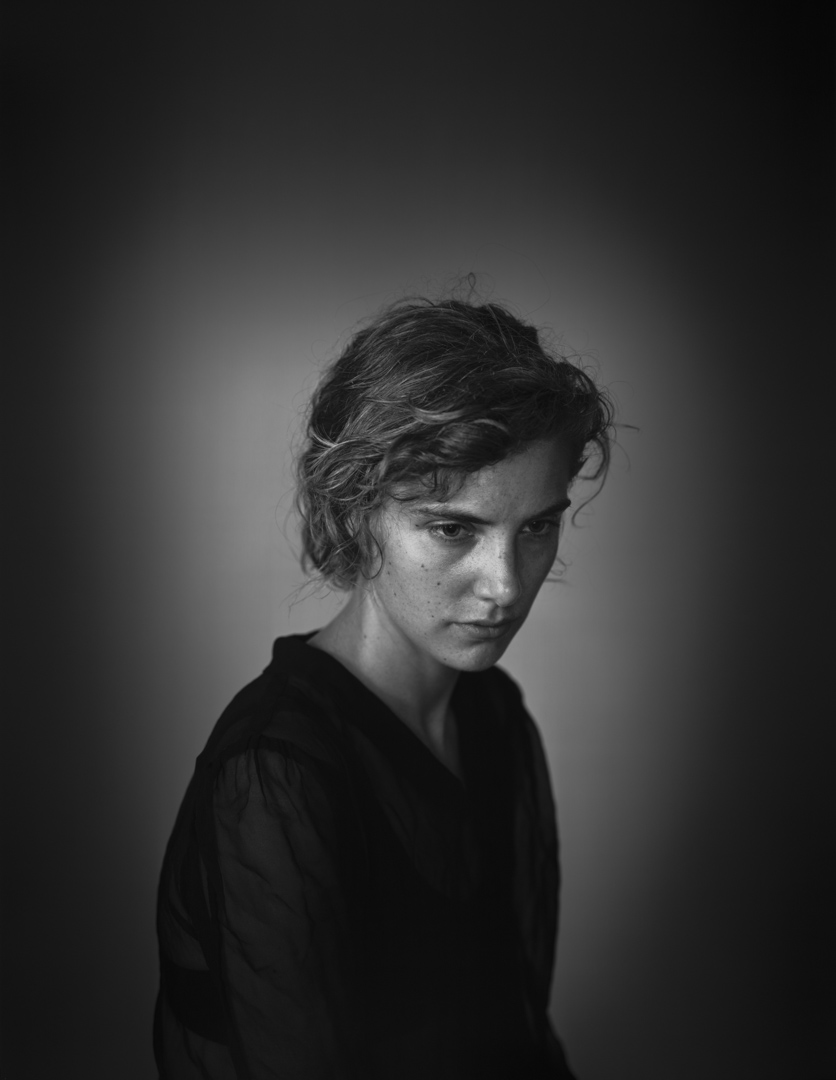 Ricahard Learoyd. Agnes, July 2013 (8), 2013; gelatin-silver contact print. Courtesy of Fraenkel Gallery, San Francisco. © Richard Learoyd.
And so one might be tempted to regard the few portraits in the collection differently than one would if they had appeared in an exhibit solely that focused solely on people, such as “Presences” (2011). While the great scale and clarity of the nature scenes evoke that thing that the Romantics called the sublime, these attributes have the opposite effect on the images of people. When depicted on a larger-than-life scale, a human being looks oddly frail and full of imperfections. One might expect that, given the size, the clean, classic compositions, the richness of the black-and-white palette, and the quiet timeless beauty of the sitter, the emerging characters would seem more monumental.2 But although the level of detail does not affect the grandeur of the nature scenes, it does diminish the nobility of the portraits' subjects: the mark on the breast where a too-tight bra left an indentation, the bit of grime under the fingernail, the faint hint of a furrow on an otherwise placid brow, the slightly sunken posture of a standing nude. These portraits are contradictions; they inspire clumsy descriptive phrasing like “magnificent vulnerability” or “gamine-giantess.” But they also align with the Romantics' position on the sublime: the more attuned one is to the “oblivious majesty” of nature, the more one recognizes the waiflike and puny status of man.3
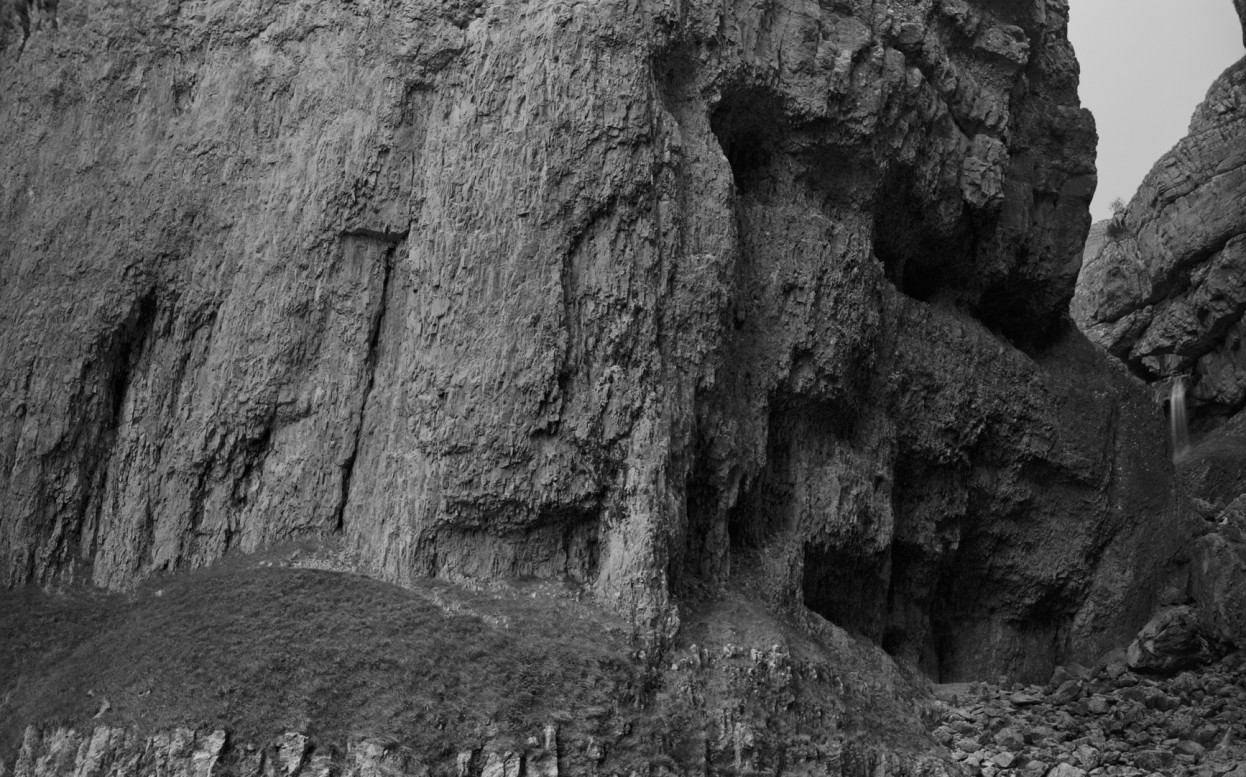 Richard Learoyd. Gordale Scar, 2013; gelatin-silver contact print. Courtesy of Fraenkel Gallery, San Francisco. © Richard Learoyd.
The Outside World is on view at Fraenkel Gallery, in
San Francisco
, through October 26, 2013.