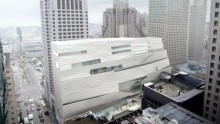
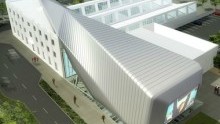
May 30, 2013. As the University of California, Berkeley Art Museum and Pacific Film Archive begins construction on its new home in downtown Berkeley, and as the pending three-year closure of the San Francisco Museum of Modern Art on June 2 is just days away, the expected radical spatial reconfiguration of each institution has prompted an increasing level of conversation, speculation, and even anxiety among the audiences for both. Just as these museums' edifices will be permanently altered or relocated, so too will our recognition of and relationships to them as institutions change. Familiar terrain conjures a sense of ownership; negotiating new territory will also involve a process of reclamation if we continue to identify ourselves as the audience. This issue considers the terms of that negotiation as its central theme. Museums are “mutable objects, continually subjected to expansions, contractions, and shifts” that are political and economic as well as structural or topographic. Architecture offers an implacable façade, below which the museum is a malleable and contestable site, housing multiple means and forms of assembly, competing ideologies, objectives, and temporal sensibilities, recurring power struggles—whether between individuals or between the contextual and aesthetic experiences of a work—and the innumerable perspectives of those who flow through it. This is how the institution thrives, through a continuous cycle of assertion, absorption, and self-reflection, and the articles included here reflect myriad ways by which each function occurs. In the Bay Area, we will have an opportunity to experience local museums shedding their current façades, the fluidity with which they take on their new ones, and the extent to which we as audiences might bend or press our desires onto them. This issue, then, is a jumping-off point for a subject we will return to numerous times in the coming months and explore through a range of lenses. Enjoy. —PM