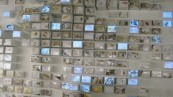
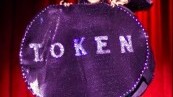
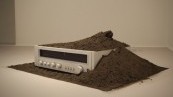
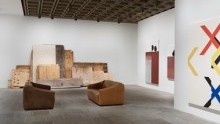
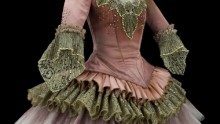
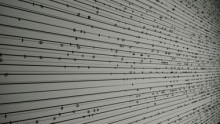
December 4, 2012. The aptly named Bone Yard, the main exhibition space for the Neon Museum in Las Vegas, prompts comparison to both Rudolf Nureyev: A Life in Dance at the de Young Museum and Wade Guyton: OS, the artist’s mid-career retrospective at the Whitney Museum of American Art. Mary Anne Kluth notes that the retired casino signs function as talismans for an oral history of the community and folklore that fall outside the glare of the working lights of the Strip. Objects must be imbued with their history to remain vital, as Larissa Archer observes in her review of Rudolf Nureyev; the costumes that the dancer designed become “dry, empty, and hung stiff” in the absence of either performing bodies or the details of Nureyev’s complex life. But in contrast, the threat of technical obsolescence that hangs over the inkjet printers Guyton uses to create his paintings may also provide a “point of productive impasse,” as Alex Bigman suggests for the artist. Here, the “lingering sense of finitude [that] gives way to one of possibility” depends as much upon the narratives yet to be constructed as the ones already written. Enjoy—PM.



 By Ellen Tani
 By Mary Anne Kluth
 By Bean Gilsdorf
 By Alex Bigman
 By Brandon Brown
 By Larissa Archer
 By Renny Pritikin
 By Natasha Boas
 By Shotgun Reviews